
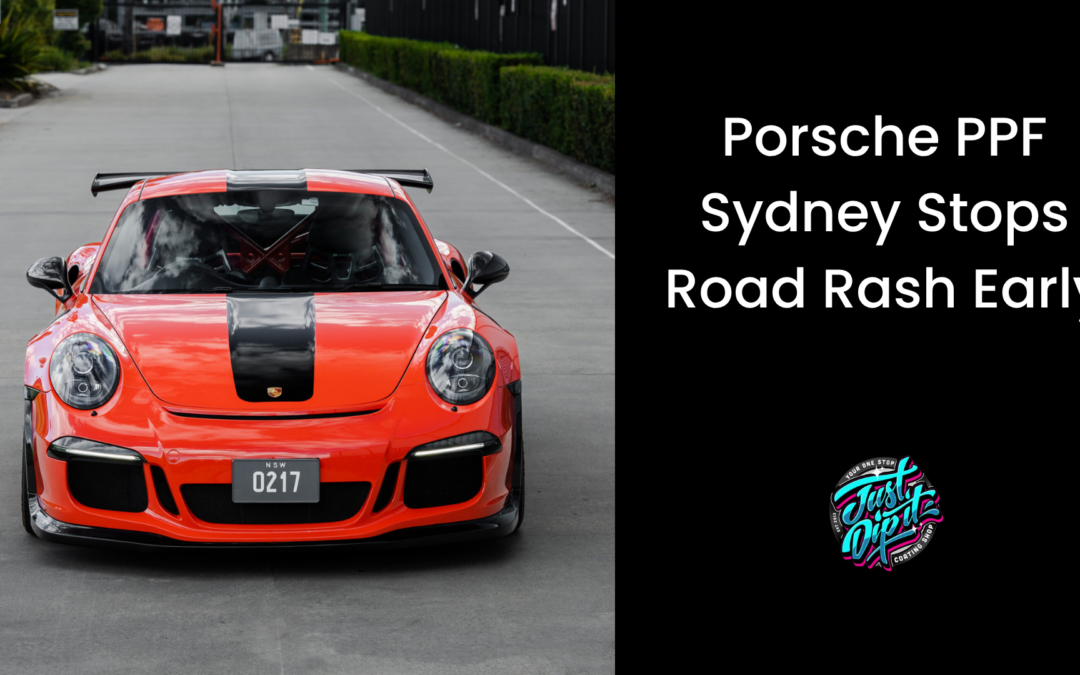
Porsche PPF Sydney: The Smart Protection Move Before Road Rash Starts
Porsche PPF Sydney protection makes the most sense before stone chips, road rash and lower-body wear start changing how the paint looks under close inspection. Porsche owners tend to notice details other drivers ignore. One small bonnet chip may seem minor, but once it interrupts a clean reflection, it becomes difficult to stop seeing.
Some owners want every painted panel protected. Others want the highest-risk areas covered first. Both approaches can work. The smarter decision is to identify where the Porsche takes the most punishment and install Porsche paint protection film before everyday driving leaves permanent evidence.
Quick Answer: Where Should PPF Be Installed on a Porsche?
PPF should usually be prioritised on a Porsche’s front bumper, bonnet, front guards, mirrors, side skirts and rear wheel impact zones. These areas face the greatest exposure to road debris, stone chips, tyre spray and abrasion. Daily-driven and motorway-used Porsches may benefit from broader coverage depending on the model, paint condition and owner expectations.
Who This Helps
This guide is for Porsche owners who want to preserve original paint, reduce visible road rash and maintain a cleaner finish over time.
It is particularly relevant to new Porsche owners, daily drivers, weekend performance cars and vehicles regularly using Sydney motorways or longer-distance roads.
Just Dip It provides paint protection film in Sydney alongside dedicated Porsche vehicle customisation, allowing protection to be planned around the vehicle rather than treated as a generic film installation.
Where Should PPF Be Installed on a Porsche?
Not every panel faces equal risk.
A large door can receive less impact than a small mirror cap or rear wheel section because exposure matters more than panel size. The strongest PPF strategy therefore protects the surfaces most likely to receive repeated damage first.
The JDI Porsche PPF Priority System
Just Dip It approaches Porsche protection in three practical levels.
Priority 1: Direct Impact Zones
Front bumper, bonnet, front guards and mirrors.
Priority 2: Tyre-Thrown Debris Zones
Side skirts, lower body sections and painted areas around the rear wheel impact path.
Priority 3: Finish-Preservation Zones
Doors, rear quarters and remaining painted surfaces where whole-car finish consistency matters more than impact protection alone.
JDI insight: The best Porsche PPF package is not necessarily the package covering the most paint. It is the package protecting the surfaces receiving the most repeated exposure.
Front Bumper
The front bumper usually deserves first priority because it sits directly in the path of stones, grit, insects and debris thrown from vehicles ahead.
Repeated impacts gradually create peppering across painted surfaces. Installing PPF for Porsche early allows the film to absorb much of this everyday exposure instead of the original paint.
Bonnet and Front Guards
The bonnet and front guards share the same frontal impact environment.
The leading bonnet surface is vulnerable to debris travelling upward from the road, while the curved guards can show chips clearly when light runs across the paint. Full-panel protection may also provide cleaner visual continuity than smaller partial sections for owners who care strongly about close-inspection finish quality.
Mirrors
Mirror caps project outside the vehicle body and regularly meet road debris and insects.
They are small surfaces, but highly visible. Adding them to a front-end Porsche PPF package provides protection without dramatically increasing the amount of film required.
Side Skirts and Rear Impact Zones
Side skirts and rear wheel areas face a different problem.
Instead of debris approaching from the front, material can be thrown from the Porsche’s own tyres across lower painted surfaces. Exact exposure varies between models, which is why these areas should be inspected rather than automatically included or ignored.
JDI insight: Front-end PPF manages debris arriving at the vehicle. Side-skirt and rear-impact PPF help manage debris thrown by the vehicle itself.
Porsche dealerships also offer paint protection film packages covering similar high-impact areas, including the bonnet, bumper, guards and mirrors. Porsche’s paint protection film information supports the same impact-zone approach.
Why Road Rash Builds Faster Than Owners Expect
Road rash rarely arrives as one dramatic event.
One bumper chip is easy to dismiss. One bonnet mark feels manageable. A few lower-body scratches may go unnoticed. The problem appears when those individual defects begin accumulating and breaking the clean reflections across the paint.
Sydney driving creates plenty of opportunities for this. Motorway traffic, roadworks, loose aggregate and debris from surrounding vehicles all contribute to repeated exposure.
A Porsche does not need to be driven aggressively to collect road rash. Regular kilometres are enough.
JDI insight: PPF value is driven by frequency of exposure as much as driving style. A regularly driven Porsche can accumulate significant cosmetic wear without ever being driven hard.
PPF therefore works best as prevention.
If chips and defects already exist, correction or repair may be needed before protection is installed. Protecting clean paint early is usually simpler than trying to restore it later.
Partial Porsche PPF or Full-Body Protection?
Partial PPF is best for owners who want protection focused on predictable damage zones.
A strong package might cover the bumper, bonnet, front guards and mirrors, with side skirts and rear impact sections added where required. This gives the highest-risk areas physical protection without automatically covering every painted panel.
When Targeted PPF Makes Sense
Choose targeted protection when your primary concerns are:
- Stone chips
- Front-end road rash
- Lower-body abrasion
- Regular motorway driving
- Protecting high-impact areas efficiently
JDI insight: Targeted PPF is an exposure-management strategy. It protects where damage is expected to begin.
When Full-Body PPF Makes Sense
Full-body PPF becomes more relevant when the priority is broader finish preservation.
It may suit a new Porsche, a high-value specification, a collector vehicle or an owner who wants greater protection against minor scratches and cosmetic wear across the whole car.
JDI insight: Partial PPF protects the Porsche’s highest-risk surfaces. Full-body PPF protects the consistency of the overall finish.
There is no reason to automatically choose the largest package.
The better question is: What does this Porsche actually need protected?
Just Dip It can assess the vehicle, paint condition and driving exposure before recommending the appropriate level of coverage.
Porsche PPF vs Ceramic Coating
PPF and ceramic coating both protect paint, but they solve different problems.
Paint protection film creates a physical barrier designed to reduce damage from road debris, stone impacts and abrasion.
Ceramic coating focuses more on surface behaviour. It can improve water repellency, make cleaning easier and help reduce contamination bonding to the finish.
When to Choose PPF
Choose PPF when your main concern is:
- Stone chips
- Road rash
- Physical abrasion
- High-impact areas
- Preserving original paint
When to Choose Ceramic Coating
Ceramic coating makes more sense when your priorities include:
- Easier maintenance
- Hydrophobic performance
- Gloss
- Surface slickness
- Reduced contamination adhesion
For many Porsche owners, the stronger approach is not choosing one or the other.
PPF can protect the high-impact sections while ceramic protection supports maintenance across appropriate surfaces.
Just Dip It also provides paint correction and ceramic coating for owners who want the underlying paint prepared and protected correctly.
JDI insight: PPF addresses physical impact and abrasion. Ceramic coating primarily improves surface behaviour and maintenance. They protect paint in different ways.
Why Porsche PPF Installation Quality Matters
A good Porsche PPF Sydney installation should protect the car without becoming the first thing you notice.
The eye should still read the paint, body shape and reflections. Visible contamination, poor alignment and obvious edges immediately weaken the result.
Porsche bodywork also includes curves, panel transitions and detailed surfaces where poor installation can become obvious under close inspection.
Preparation therefore matters.
The paint should be inspected and properly prepared before installation. Film placement, edge management and finishing should all support a result that looks integrated with the vehicle.
The practical standard is simple:
Stand back, and the film should disappear. Move closer, and the finish should still look deliberate.
It works across Porsche customisation projects and Porsche exotic vehicle builds, allowing PPF to sit within the wider presentation of the car rather than being treated as an isolated product.
The Porsche PPF Mistake to Avoid
The easiest mistake is waiting until the damage becomes obvious.
Once road rash is established, the owner may need to address existing paint defects before installing protection. That means solving two problems instead of one.
Another mistake is choosing a package based purely on the amount of film included.
A small rear wheel impact section may need protection more urgently than a much larger door because it experiences repeated debris exposure.
That is why Porsche-specific protection planning matters.
Protect the areas that are actually taking the punishment.
Common Porsche PPF Questions
Where should PPF be installed first on a Porsche?
Start with the front bumper, bonnet, front guards and mirrors. These surfaces face the greatest direct road exposure. Side skirts and rear wheel impact zones should then be considered according to the model and how the vehicle is driven.
Is Porsche PPF Sydney worth it for a daily driver?
Yes, particularly when the Porsche regularly travels on motorways or busy roads. Frequent driving increases cumulative exposure to stones, grit and road debris, even when the vehicle is driven carefully.
Does the whole Porsche need PPF?
No. Owners mainly concerned about stone chips and road rash can prioritise high-impact areas. Full-body PPF is better suited to owners who want broader protection and greater whole-car finish preservation.
Should a new Porsche get PPF immediately?
Protecting the vehicle while the paint is still in excellent condition can reduce the need for correction later. The paint should still be inspected and properly prepared before the film is installed.
Can Porsche PPF stop every stone chip?
No film can guarantee protection from every possible impact. Large or high-energy debris can still cause damage. PPF is designed to reduce the effects of many common stone impacts, scratches and abrasions encountered during normal road use.
Should I choose ceramic coating or Porsche PPF?
Choose PPF when physical damage such as stone chips and road rash is the main concern. Choose ceramic coating when maintenance, water behaviour and contamination resistance matter more. Using both can provide broader protection because they perform different functions.
Porsche PPF Sydney: Protect the Finish Before the Road Changes It
The best time to think about Porsche PPF Sydney is while the paint still looks the way you want it to look.
Start with the front bumper, bonnet, guards and mirrors. Assess the side skirts and rear wheel impact zones. Then decide whether targeted protection or full-body coverage better matches the way the Porsche is owned and driven.
A Porsche should still be driven.
The purpose of PPF is not to make the vehicle too precious to use. It is to reduce the cosmetic evidence left behind by using it properly.
Just Dip It approaches Porsche paint protection film as a vehicle-specific protection decision rather than a generic package.
Explore Just Dip It’s Porsche PPF options and protect the vulnerable areas before the road starts leaving its mark.
About the Author
Just Dip It is a Sydney automotive customisation and vehicle protection workshop specialising in paint protection film, ceramic coating, paint correction, hydrographics and premium vehicle finishes. The team works across performance, exotic and enthusiast vehicles, including dedicated Porsche projects where finish quality and close-inspection detail matter.
If your Porsche paint is still clean, that is the strongest starting point. Protect the vulnerable areas now and let the protection take the punishment instead of the paint. Book your PPF consultation with Just Dip It.