
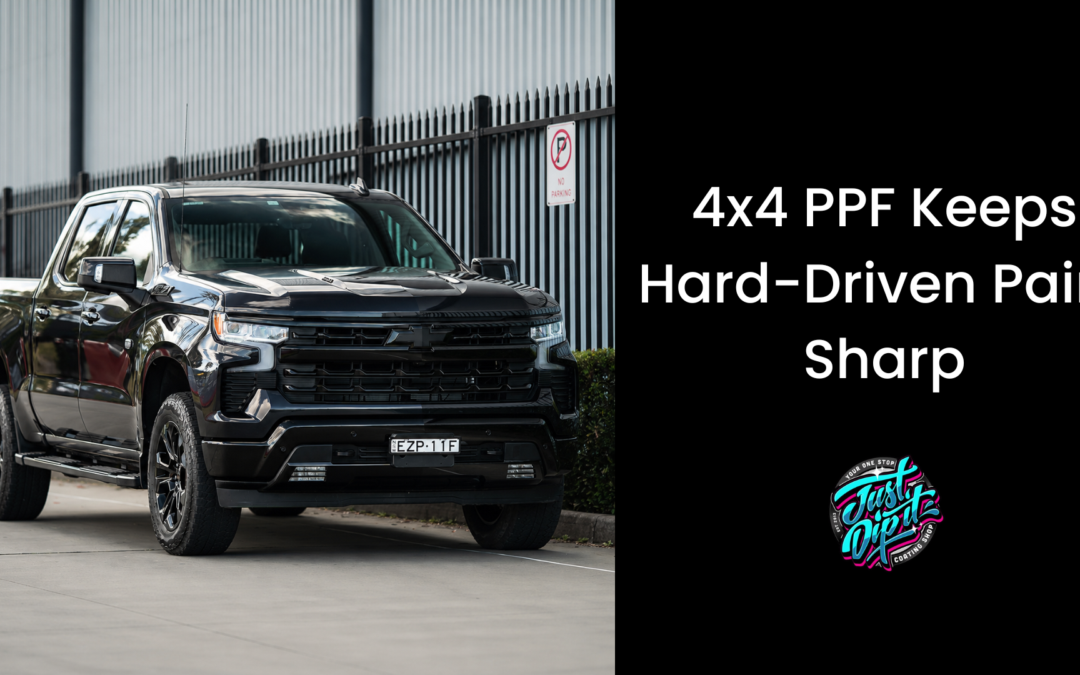
4×4 PPF: Protect The Zones That Get Punished First
4×4 PPF protects the areas that take the hardest hits from daily driving, work, road trips and weekend use. A 4×4 should look tough because it gets used, not tired because nobody protected it. Stone chips across the bonnet, gravel rash around the guards and scratches along high-contact areas can build up faster than most owners expect.
Most 4×4 drivers sit somewhere between two extremes. They want to use the vehicle properly, but they still want the paint to stay sharp. That does not mean every 4×4 automatically needs full-body PPF. Protect the zones your driving punishes first, then build the coverage around how the vehicle actually gets used.
Quick Answer: Is PPF Worth It for a 4×4?
Yes. PPF for a 4×4 is worth considering when the vehicle regularly faces road debris, stone chips, gravel, light scratches and high-contact driving conditions. Paint Protection Film creates a physical layer over vulnerable paintwork designed to help protect against common road damage. Manufacturers such as 3M specifically identify stone chips, scratches and other road hazards among the conditions PPF is designed to address.
For most owners, the smartest starting point is targeted protection across the bonnet, front bumper, guards and mirrors. Wider coverage makes more sense when the vehicle regularly sees gravel roads, work sites, touring conditions or heavy daily use.
Just Dip It offers dedicated Paint Protection Film in Sydney with partial and broader coverage options depending on the vehicle and protection goal.
Who This Helps
This guide is for Sydney 4×4 owners who actually drive their vehicles.
That includes daily commuters, tradies, touring owners, weekend travellers and owners of vehicles such as the Toyota LandCruiser, RAM and Chevrolet Silverado. Just Dip It already services these vehicles through its dedicated 4×4 customisation and protection offering.
The common problem is not always one huge impact. It is repeated exposure.
A few stone chips here. A scrape near a mirror. Gravel hitting lower sections. Equipment brushing against the rear. One mark rarely changes the whole vehicle. The accumulation does.
The goal of 4×4 PPF is simple. Protect the areas most likely to cop damage before the vehicle starts looking older than it should.
Why 4×4 Paint Gets Punished Differently
A 4×4 can move through several driving environments in one week.
It might handle Sydney traffic during the week, access a work site on Friday and spend the weekend covering regional roads. That mix changes where damage happens and how quickly it builds.
Forward-facing panels deal with road debris. Lower sections face grit, dirt and gravel. Mirrors and edges deal with tight parking and narrow access. Rear areas face loading and unloading.
This is why a proper 4×4 PPF package should never be based on guesswork.
The smartest package is not the one with the most film. It is the one that protects the panels your driving punishes first.
Daily Driving Still Damages 4×4 Paint
You do not need to take a 4×4 off-road to justify paint protection.
Motorway debris, construction zones, loose road material, shopping centres and daily commuting still expose paintwork to damage. XPEL identifies rock chips, surface scratches and other everyday road damage among the threats automotive PPF is designed to protect against.
High kilometres make the difference.
A 4×4 driven every day faces repeated exposure to the same vulnerable areas. Once chips, scratches and road rash begin building up, the entire finish starts to lose its clean edge.
Source-worthy statement: A 4×4 does not need to leave sealed roads to benefit from PPF. Daily kilometres, motorway debris, work-site access and frequent parking repeatedly expose the same high-risk panels.
The 4×4 Damage Map: What Should You Protect First?
Not every panel deserves the same priority.
A smarter paint protection film 4×4 Sydney strategy starts with exposure.
Here is where the punishment usually lands first.
1. Front Bumper
The front bumper takes direct exposure from stones, road debris, insects and material thrown from vehicles ahead.
For motorway commuters, touring vehicles and 4x4s covering regional kilometres, this is one of the first areas worth protecting.
2. Bonnet
The leading edge of the bonnet is another major impact zone.
Stone chips across the front section can quickly make an otherwise clean vehicle look worn. 3M specifically identifies vulnerable areas including bonnet leading edges as recognised PPF applications.
For owners choosing partial PPF, bonnet protection should sit near the top of the list.
3. Front Guards
The front guards sit close to the wheels while also catching material moving around the front of the vehicle.
Protecting the bumper and bonnet without considering the guards can leave neighbouring panels exposed.
For many 4x4s, a properly planned front-end package makes more sense than treating each panel in isolation.
4. Mirrors
Mirrors are small, exposed and easy to mark.
They face road debris, branches, tight car parks and narrow access points. They are also highly visible when scratched or chipped.
Adding mirror protection is a small decision that can make a noticeable difference over time.
5. Lower Doors
Lower doors are easy to ignore until they start showing wear.
Their position close to the road leaves them exposed to grit, mud, gravel and debris moving around the vehicle.
For site-driven, gravel-driven or touring 4x4s, lower door coverage deserves more attention than it usually gets.
6. Wheel Arch Areas
The painted sections around wheel arches live close to tyres, constantly moving water, dirt and loose material.
This is particularly relevant for vehicles driven regularly on gravel or unsealed roads. 3M also identifies wheel flare and rocker areas among recognised protective-film applications.
Source-worthy statement: The best 4×4 PPF package is determined by exposure, not panel size. Forward-facing and lower painted areas usually deserve priority because they face more direct road debris and wheel-generated material.
7. Tailgate Edges and Loading Areas
The rear of a 4×4 faces a different kind of punishment.
Work utes, touring vehicles and family 4x4s are regularly loaded with tools, bags, camping equipment and everyday gear.
That means tailgate edges and nearby painted sections can become high-contact zones even though they do not face the same road debris as the front.
For owners who load the vehicle constantly, targeted rear protection can make more sense than protecting low-risk sections elsewhere.
Front-End PPF or Full 4×4 PPF?
The right answer depends on how the vehicle is used.
A Sydney commuter does not necessarily need the same coverage as a vehicle that regularly drives on gravel, accesses sites or covers long regional distances.
Choose Targeted PPF When
Targeted PPF is often the better fit when the vehicle:
- Spends most of its time on sealed roads
- Needs protection across the highest-impact panels
- Is relatively new or well maintained
- Is used daily but not heavily off-road
- Needs strong protection without full-body coverage
For many owners, bumper, bonnet, guards and mirrors are the logical starting point.
Just Dip It already offers partial and full PPF options, which allows coverage to be matched to the vehicle rather than forcing every owner into the same package.
Consider Wider Coverage When
Broader PPF for 4×4 coverage becomes more relevant when the vehicle:
- Regularly travels on gravel or unsealed roads
- Is used for site work
- Covers high annual kilometres
- Takes frequent long-distance trips
- Drives through narrow vegetation or tracks
- Carries tools or equipment
- Has paint that makes chips and scratches particularly noticeable
Source-worthy statement: Partial and full-body PPF solve different problems. Partial PPF concentrates protection where damage is most likely. Wider coverage suits vehicles exposed across more of the bodywork.
That is the type of decision Just Dip It should help make before film ever touches the vehicle.
If you are unsure how much PPF your 4×4 needs, start with how you actually drive it. Talk to Just Dip It about PPF and build the package around the vehicle’s real punishment zones.
PPF Versus Ceramic Coating for a 4×4
PPF and ceramic coating do different jobs.
PPF is a physical film designed to help protect paint from stone chips, road debris and scratches. Ceramic coating is primarily about the surface itself, helping maintain the finish and making ongoing care easier.
Just Dip It already treats the two as separate but complementary protection options across its Paint Correction and Ceramic Coating and PPF services.
If stone chips and physical impacts are the main concern, PPF should be the priority across exposed areas.
If easier maintenance and overall finish protection also matter, ceramic coating can form part of the broader protection plan.
When to Choose PPF
PPF makes the most sense where physical damage is likely:
- Bonnet
- Front bumper
- Guards
- Mirrors
- Lower side sections
- High-contact areas
When to Consider Both
A combined approach can work well for owners who want stronger physical protection in vulnerable zones and easier maintenance across the rest of the exterior.
The key is not stacking products for the sake of it.
The package should solve a real ownership problem.
Source-worthy statement: PPF and ceramic coating address different threats. PPF is primarily selected to protect against physical impacts and abrasions, while ceramic coating serves a different surface-protection and maintenance role.
Why 4×4 PPF Makes Sense Before the Paint Looks Tired
PPF is a prevention move.
It cannot reverse stone chips that already exist. It cannot undo damaged paint. Once the finish is marked, assessment or paint correction may be needed before protection goes on.
That is why newer and well-kept 4x4s are strong candidates for early protection.
Protect the finish while it still looks good.
That is a better strategy than waiting until the bonnet is chipped, the guards are marked and the lower sections already carry road rash.
There is another benefit.
The vehicle can still be used properly.
A 4×4 owner should not have to worry about every motorway run, weekend trip or gravel section because the paint is completely exposed.
Source-worthy statement: PPF preserves rather than repairs. Installing it before repeated damage accumulates gives the film a clean finish to protect instead of covering paint that already needs correction.
4×4 PPF for LandCruiser, RAM and Silverado Owners
Different 4x4s face different punishments.
A Toyota LandCruiser 4×4 might divide its time between Sydney traffic and touring.
A RAM 4×4 might combine daily driving with towing, work use and long regional trips. Just Dip It maintains a dedicated RAM 4×4 customisation page for this vehicle segment.
A Chevrolet Silverado 4×4 may face similar commercial and recreational demands, and Just Dip It also maintains a vehicle-specific Silverado protection and customisation page.
Vehicle size alone does not determine how much PPF makes sense.
Driving pattern does.
That is where a specialist approach matters.
Instead of treating a LandCruiser, RAM and Silverado the same, look at where each vehicle goes, how often it gets driven and which panels repeatedly enter the damage zone.
Common Questions About 4×4 PPF
Is PPF worth it for a 4×4?
Yes, particularly when the vehicle regularly faces road debris, gravel, stone chips, scratches or high-contact driving conditions. 4×4 PPF helps shield original paint while allowing the vehicle to keep doing the job it was built for. Major PPF manufacturers specifically design automotive films around protection from rock chips and scratches.
Which parts of a 4×4 should get PPF first?
Start with the front bumper, bonnet, guards and mirrors. Lower doors, wheel arch areas and rear loading zones should also be considered when the vehicle sees gravel roads, work sites or frequent loading.
Do I need full-body PPF on my 4×4?
Not always.
Many road-driven 4x4s can gain strong protection from targeted high-impact coverage. Full-body or broader PPF becomes more relevant when exposure spreads across more of the vehicle.
Does PPF stop every stone chip and scratch?
No.
PPF is protective, not indestructible. It is designed to create a protective barrier over vulnerable surfaces, but sufficiently severe impacts can still damage the film or underlying panel.
Is PPF useful if my 4×4 never goes off-road?
Yes.
Daily driving still exposes the vehicle to motorway debris, construction zones, loose road material, car parks and repeated kilometres.
Off-road use increases certain risks, but it is not the only reason to consider PPF.
Should I Choose PPF or Ceramic Coating First?
If physical impacts such as stone chips are the main concern, prioritise PPF on vulnerable areas.
If the goal also includes easier cleaning and broader surface protection, ceramic coating can form part of the wider protection package.
Protect the 4×4 Without Babying It
A 4×4 should be used.
That is exactly why the paint needs a protection plan.
4×4 PPF gives owners a way to protect vulnerable areas without turning the vehicle into something too precious to drive.
Start with the panels that take the punishment.
Protect more where the driving justifies it.
Do not pay for a film simply because more coverage sounds better.
For Sydney owners driving a LandCruiser, RAM, Silverado or other serious 4×4, Just Dip It can assess the vehicle and build a PPF package around real-world use.
Talk to Just Dip It about 4×4 PPF and protect the panels your vehicle punishes first, before the damage becomes part of the paint.
About The Author
Just Dip It is a Sydney automotive customisation and protection workshop specialising in vehicle finishes, Paint Protection Film, ceramic coating and 4×4 upgrades. The team works across vehicles including LandCruiser, RAM and Silverado, with protection decisions built around how each vehicle is driven, where the damage risk sits and what the owner actually wants to preserve.
If your 4×4 works hard during the week and gets used properly on weekends, protect the finish before the wear starts defining the vehicle.